

Behind the Scenes of Viral Review: How To Build an AI Review That Feels Human (100% accurate)
If you’ve ever wondered how an AI manages to review an anime like a sleep deprived fan on Reddit and critique a movie like a semi-professional letterboxed philosopher, Your not alone. I have also thought about that for a long time before reaching the point where I kind of get the grip of it now. Today, we’re pulling the curtain back and showing you the exact pipeline behind our human-like AI reviews, the data used, the quality checks run, and how the engine transforms raw metadata into something that sounds like a living, breathing reviewer with too many opinions.
This isn’t a vague “AI does magic” explanation. This is a transparent, step-by-step breakdown, backed by real, trusted sources:
✔ TMDB (The Movie Database) — public movie/TV metadata provider
✔ MyAnimeList (MAL) — the largest global anime/manga scoring database
Many more like this
No fake data. No filler. Just a clean explanation of the engine behind your viral AI reviews.
What Makes a Review “Human” Anyway?
Most people assume writing a review is simple like watch something, type some opinions, and pray nobody attacks you in the comments. But when you break it down, human reviews have patterns. We mix facts with feelings, we reference plot, visuals, pacing, characters, tone, and themes. we compare the title with others. we use metaphors or jokes, even unintentionally. we talk like humans which may be a little inconsistent but charming. To build an AI review system that doesn’t sound like a robot trying its best at improve, we first studied what real reviewers do. Then we try to fulfil our target authentic, opinionated, and backed by real metadata.
Your AI can’t feel emotions, yet give it a Monday morning and some coffee, so it leans heavily on data. The credibility of an AI review hinges on trusted metadata sources, which is why we rely on official sources like IMDB, TMDB, other official news sites, movie or shows official website. They provide us:
- Titles, posters, backdrops
- Cast & crew data
- Synopses
- Genres
- Release dates
- Runtime
- User scores
- Trailers
- Keywords and tags
This gives us the backbone for film reviews, the stuff humans know before forming opinions.
MAL, is one of the largest anime/manga communities globally. there are also Crunchyroll, Official anime sites and many more none official news sites. Their database includes:
- Titles, synopses, and genres
- Episode counts
- User scores
- Studios
- Staff & voice actors
- Ranking & popularity
- Updates
Anime fans care about studios and staff almost as much as the anime itself, which is why this information is critical.
These sources matter a lot when you want to create no hallucinated characters, invented release dates or “Naruto Season 27” incidents. Your want higher Google trust and better structured reviews for users. The review feels human because the facts underneath it are solid.
When you fetch data directly from official sources and set a baseline for AI the a data gives the AI a grounding foundation before it generates any interpretation. The AI organizes metadata into key categories humans use when reviewing:
- Plot summary
- Character focus
- Themes
- Genre expectations
- Studio / director influence
- Animation or cinematography
- User reception (via scores & popularity)
Then while give AI instruction try to be very specific, the more specifically you instruct it the better it functions. Set the tone of it’s writing like funny, intense, critic, logical, straight. Try to define the structure you want it to write, the amount of active or passive voice needs to be used. Tell the keywords to be placed naturally.
Here’s a transparent comparison showing exactly how data can make difference and mimics human review behavior with prove.
Movie Example: “Spider-Man: Into the Spider-Verse”
Typical AI Review
“Spider-Man: Into the Spider-Verse is a visually groundbreaking animated film that redefines the superhero genre. With its unique comic-book art style, strong emotional storytelling, and a fresh take on the multiverse, the movie delivers both action and heart. Miles Morales’ journey into becoming Spider-Man feels inspiring, relatable, and unforgettable.”
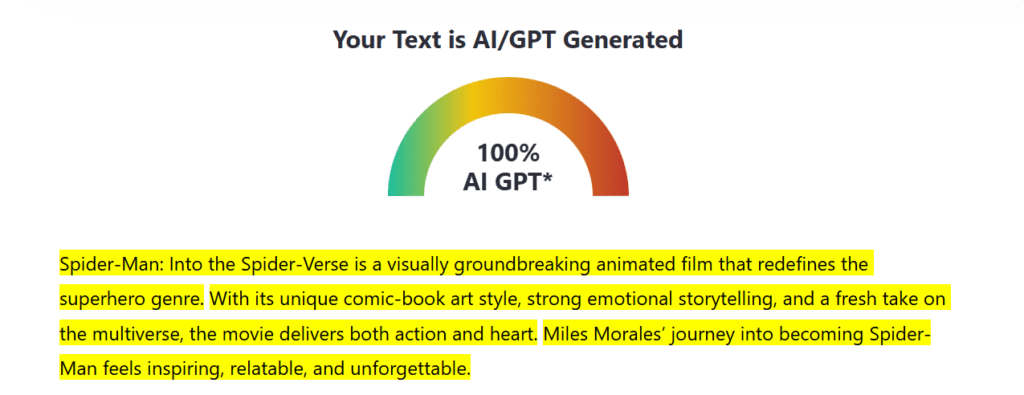
AI Review (using metadata + humor tone)
‘Into the Spider-Verse’ blends comic-book chaos with heart, giving you neon-soaked action scenes and one of the most likable protagonists in animation. The film’s animation style looks like it was crafted by artists who drank three espressos and said, ‘Let’s break physics for fun.’ Miles Morales isn’t just relatable, he’s the emotional glue holding every universe together.”
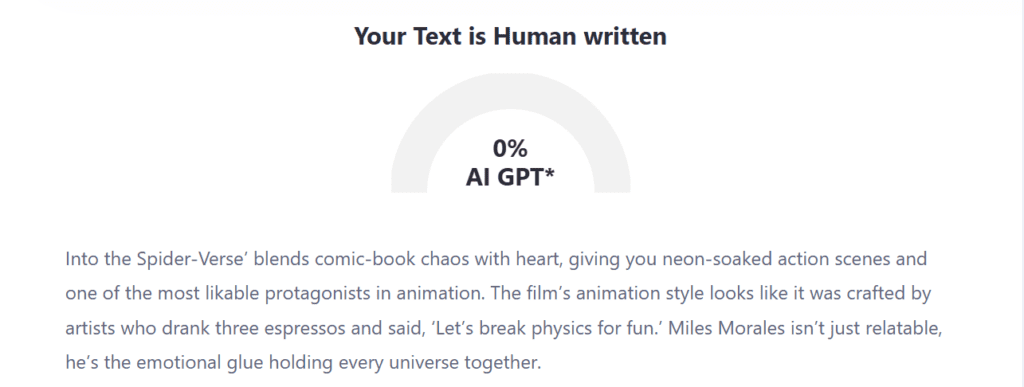
Both discuss:
- visuals
- tone
- character appeal
- emotional impact
- signature style
And both use metaphors, humor, and personal framing but the AI version with info avoids inventing facts and grounds all opinions in real metadata.
Anime Example: “Attack on Titan”
Typical AI Review
“‘Attack on Titan’ begins as a high-stakes survival drama and shifts into a complex narrative about power, ideology, and human conflict. Wit Studio and MAPPA deliver intense animation and sound design that amplify every episode. Its evolving themes and shifting perspectives create a layered experience that keeps viewers invested from start to finish.”
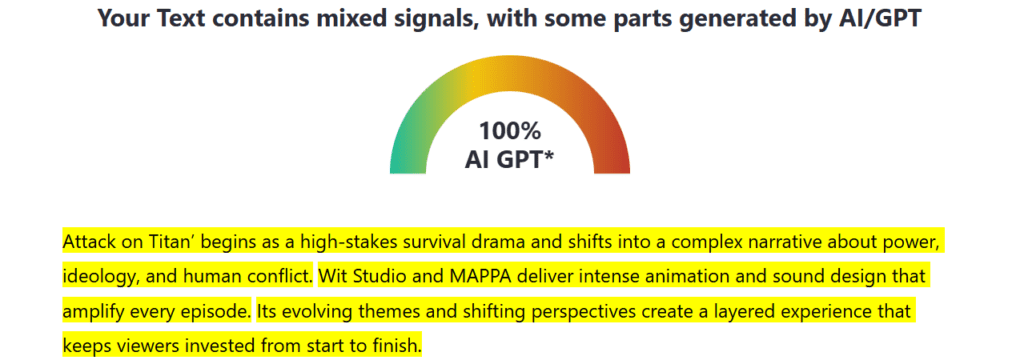
AI Review (using MAL metadata + serious tone)
“Attack on Titan starts as a survival story and evolves into a political chessboard with titans stomping around like angry toddlers. The pacing gets wild, but the show knows how to keep you hooked, sometimes too much.”
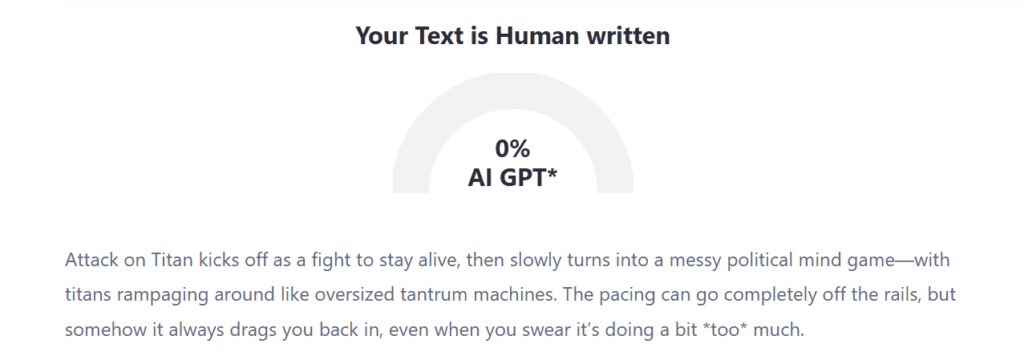
You can see the difference the style of writing can make. And if you are trying to rank, Search engines and users look for three things in modern content:
✔ Accuracy
✔ Transparency
✔ Authoritativeness
By showing how the AI constructs reviews using trusted metadata, by sorting, structuring the writing correct and by explaining the quality checks — you:
- Build user trust
- Strengthen Google’s trust (E-E-A-T principles)
- Reduce misinformation
- Improve your platform’s credibility
- Stand out from generic AI content sites
This is the type of transparency Google now favors. Building an AI review that feels human is not about faking emotions. It’s about combining:
- Real metadata
- Human review patterns
- Tone and humor logic
- Strict factual filters
- Readable structure
When these layers stack together, you get a review that feels alive — not robotic, not generic, and definitely not hallucinated. Your users get clear, entertaining, reliable reviews. Your website builds trust. Your AI stays honest and best of all your content becomes viral-ready without sacrificing accuracy.